
Weekly Robalo Boat Rental in Marco Island: Features and Fuel
A week on the water is easier when you plan your own food and drinking water instead of assuming provisions come with the boat. For a weekly Robalo rental on Marco Island, the practical details matter too: know what’s aboard, what fuel you’ll pay for, and how cancellation terms work before your trip begins.
You’re right to think beyond the boat itself. Fishing equipment, onboard comfort, and the right boat type all shape your days on the water, while clear plans for meals and water help your group feel prepared. This guide explains what to expect from a Robalo R200, how fuel responsibility works, and what to understand about cancellation policies, so you can plan your week with fewer surprises.
Table of Contents
Fishing and onboard fishing equipment
If fishing is part of your plans, separate fishing supplies from safety gear. Pack rods, reels, bait, hooks, and personal tackle for the kind of fishing you have in mind. Life jackets are safety equipment, not fishing supplies, and you should not assume fishing gear will be aboard.
Before departure, make a checklist of rods and reels, tackle, bait, sun protection, and a way to keep your catch. Match hooks and lures to your planned fishing, and secure sharp tackle when it is not in use. If people in your group have different plans, put supplies in labeled bags so the right gear is easy to find.
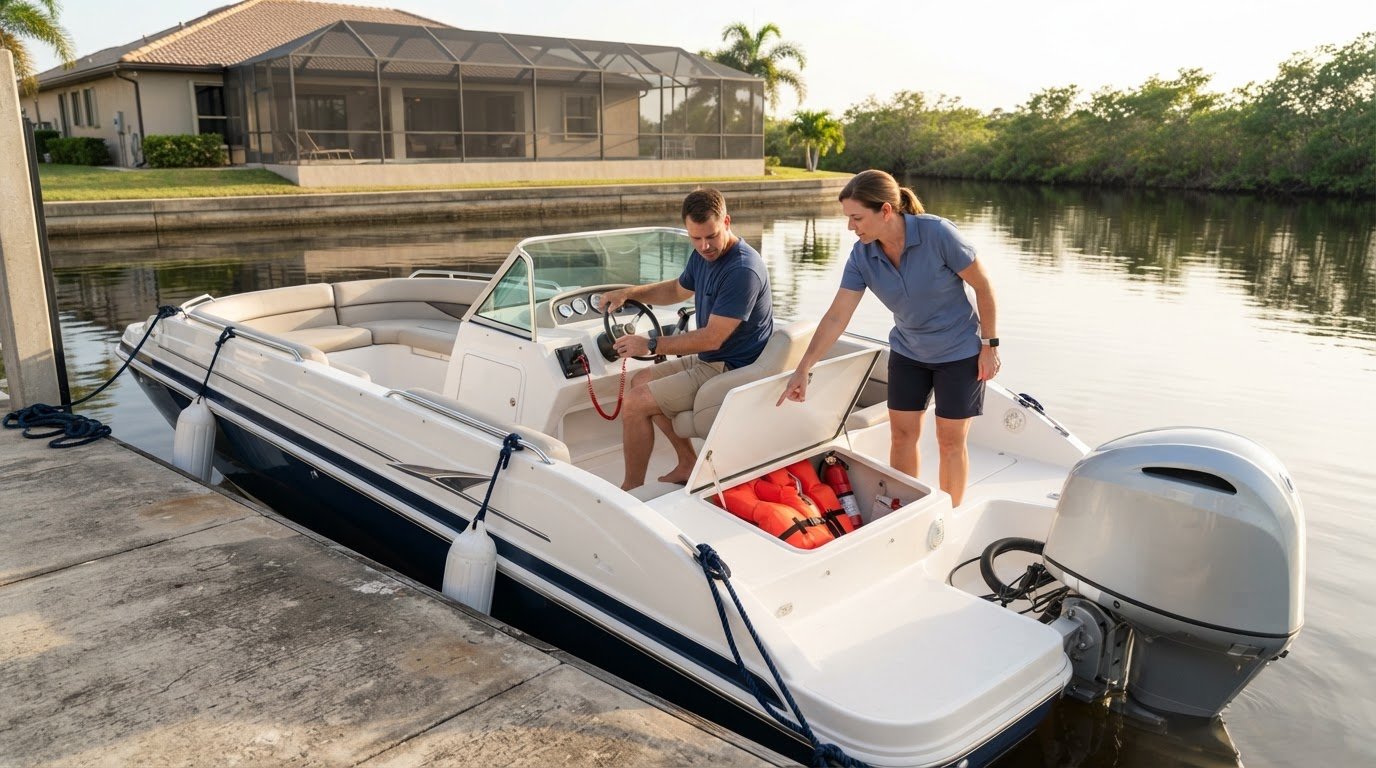
Safety equipment deserves its own count. The rental boat has 8 life jackets, so include each passenger in your boarding plan and keep jackets accessible. A boat that accommodates up to 8 guests can be full, leaving less room for loose gear. Stow tackle so it doesn’t block movement or access to safety equipment.
For a weekly Robalo rental in Marco Island, plan fishing around the days you expect to be on the water. You might set aside some days for inshore exploring and others for rest or sightseeing, while keeping your tackle bag flexible. Towing watersports are not permitted with the rental, so plan around fishing and cruising instead.
Florida requires boaters born after January 1, 1988 to complete a state-approved boat rental course. That birth-date rule is the specific course requirement; it does not itself describe a minimum rental age or years of experience.
Routes, speed zones, and navigation restrictions around Marco Island vary by waterway. Follow channel markers and posted speed guidance, and account for shallow areas, changing conditions, and a safe route back.
A trip to the Ten Thousand Islands, a beach, or another nearby destination depends on whether it falls within the rental’s permitted operating area and your planned route. Choose a destination before departure and allow time for the journey, fishing stops, and the return.
Book once your travel week is set, especially if you’re planning around peak-season dates. Earlier planning gives you more time to coordinate the boat, fishing supplies, passenger needs, and route. Keep your tackle list separate from your safety checklist, and review both before leaving the dock.
The Marco Island rental fleet includes boats ranging from 22ft-30ft long. When choosing how to pack, consider how your fishing equipment will fit alongside passengers and other supplies, and keep frequently used tackle easy to reach. A compact, organized setup can make it simpler to move around the boat and retrieve gear without disturbing safety equipment or crowding shared spaces.
Cancellation policies
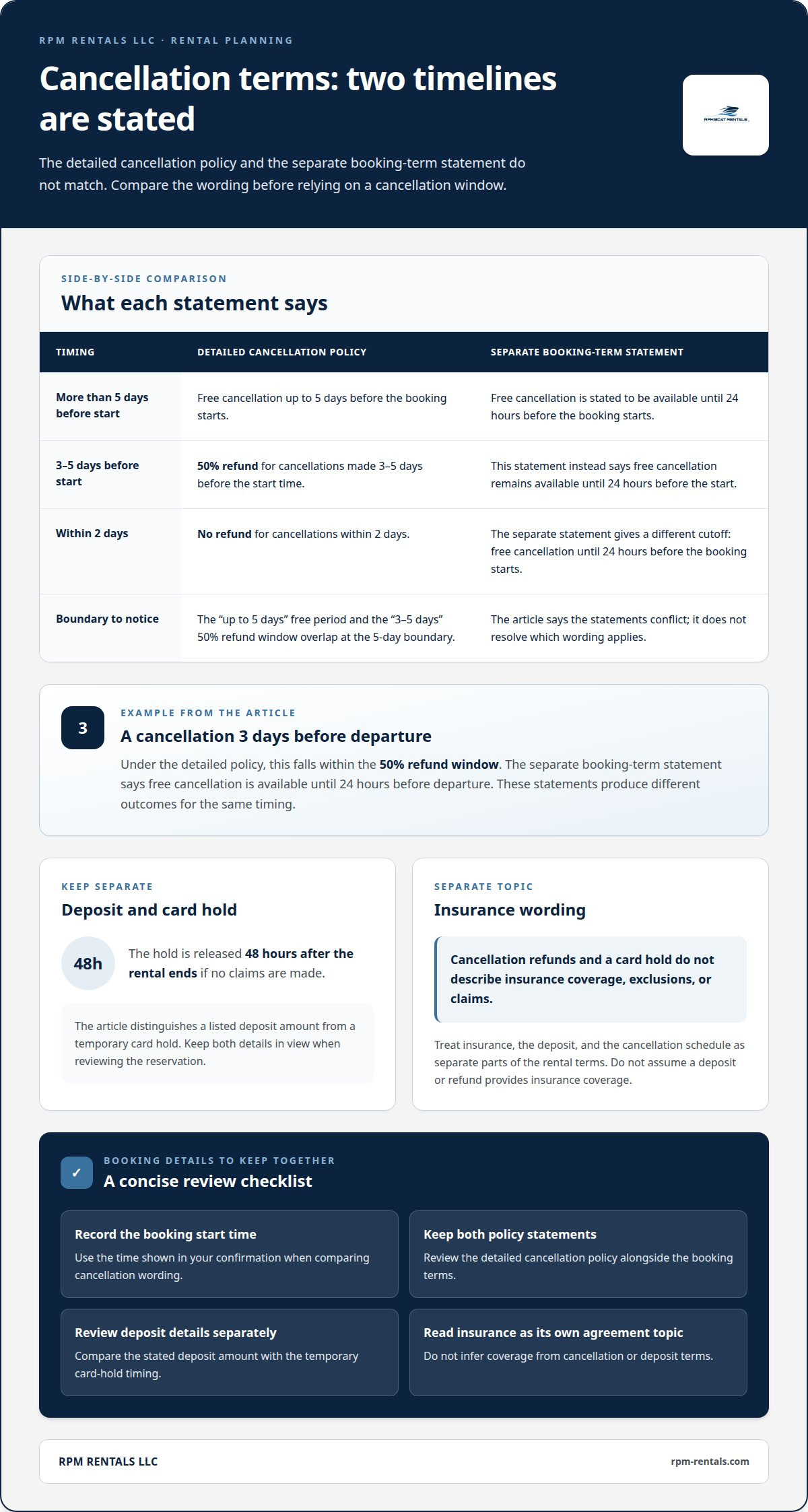
Cancellation terms matter before you set travel dates, especially for a weeklong stay on Marco Island. The detailed policy says cancellations are free up to 5 days before the booking starts. It also lists a 50% refund for cancellations made 3-5 days before the start time, then no refund for cancellations within 2 days. Those windows overlap at the 5-day boundary, so read the stated terms as written rather than assuming the bands form a seamless schedule.
There’s another difference to notice: the booking terms also say free cancellations are available until 24 hours before the booking starts. That conflicts with the detailed policy’s 5-day free-cancellation cutoff and its refund tiers. The timing matters. For example, a cancellation made 3 days before departure falls within the detailed policy’s 50% refund window, but not the separate statement allowing free cancellation until 24 hours before departure.
The deposit information also uses two different descriptions. The hold is released 48 hours after the rental ends if no claims are made. A listed deposit amount and a temporary card hold are distinct details, so keep both in view when reviewing the reservation.
Insurance, the deposit, and the cancellation schedule are separate parts of the rental terms. Refund timing and a card hold do not describe insurance coverage, exclusions, or claims. Read the insurance terms on their own rather than assuming the deposit or a cancellation refund provides coverage.
For a weekly booking, save the confirmation and note the scheduled start time. Then compare any change-of-plan date against the cancellation wording. Keep a copy accessible, even if you’re already at the console preparing for departure. A clear record helps you distinguish the 5-day, 3-5-day, 2-day, and 24-hour statements if plans change.
Record the booking start time from your confirmation.
Keep the detailed cancellation policy and booking terms together.
Review deposit-hold timing separately from the stated deposit amount.
Read insurance wording as a separate agreement topic.
For a smoother planning process, keep your dates and the rental booking details in one place. That simple step makes the cancellation windows easier to compare before travel arrangements are set.
Amenities and comfort features
Comfort on a Marco Island boat day also depends on what you bring. Pack food and drinking water for your group instead of assuming provisions will be waiting onboard. A day bag with water, snacks, and lunch keeps essentials within easy reach.
Think through each stage of the outing: boarding, cruising, stopping, and returning. Keep drinking water accessible, and gather food and rubbish before moving to another stop. For example, separate lunch and snacks in labeled containers so passengers can find what they need while keeping the deck orderly.
Florida sun makes practical comfort items important, too. Pack sunscreen, sunglasses, and a hat for each passenger, along with a light layer for changing conditions. Choose bags that close securely and group small items together. Loose wrappers, bottles, and belongings can clutter shared space and become harder to manage underway.
Food choices can make the day simpler. Pack meals that travel neatly, such as sandwiches, fruit, or individually portioned snacks. Keep food together in a sturdy container and bring drinking water in reusable bottles or sealed containers. A rubbish bag and napkins make cleanup easier.
Before leaving your accommodation, match the amount of gear to your outing. A planned lunch stop calls for more provisions than a short cruise with snacks. Keep personal items and food in separate bags so passengers can reach either without unpacking everything. If children are aboard, put familiar snacks and water where an adult can reach them.
A calm boarding routine helps everyone get settled. Assign one person to carry food and another to handle personal bags, while keeping the dock clear as passengers step aboard. Once settled, keep frequently used items within reach and stow everything else securely.
Pack food and drinking water for the time you expect to spend aboard.
Use separate containers for meals, personal items, and rubbish.
Bring sun protection and a light layer for changing conditions.
Keep essentials accessible, then secure bags and loose belongings before departure.
A little preparation makes a Marco Island outing more comfortable without relying on assumptions about onboard amenities. Build your packing list around your passengers, meals, and planned stops, then keep the deck tidy throughout the trip.
Deck boats and fishing boats
A 21-foot center-console boat suits a different mix of priorities than a deck boat. For comparison, focus on your group’s main activity, usable space, and the layout around the helm, rather than assuming every center console has identical features.
The Robalo R200 is a 21-foot center console powered by a 150-horsepower Yamaha four-stroke engine. Its fishing-boat format makes it a natural fit for anglers who want to dedicate trip time to fishing. That does not establish which rods, storage options, or electronics are aboard, so keep equipment assumptions separate from the boat’s model and engine details.
A deck boat generally gives more emphasis to shared passenger space and leisure outings. A center console has the helm in the middle, with access around it, a layout that can suit movement between fishing positions. If your family plans to cruise and fish, compare how each model supports both activities. If fishing is the main focus, prioritize the fishing layout.
Use this comparison sequence before choosing:
List the main activity. Write down whether fishing, cruising, or a mix will occupy most of the outing.
Count passengers and gear. Consider how bags, tackle, and food share the available deck space.
Think through movement. Picture passengers passing the helm or moving around rods during fishing.
Separate known specifications from assumptions. Record the model, length, and engine, then avoid presuming unlisted amenities.
Center-console boats can vary in length, seating, storage, and equipment. Compare documented details rather than treating “center console” as a complete specification. Length alone does not tell you about seating, passenger capacity, or comfort. Match each listed feature to a practical need, such as space for fishing gear or a comfortable shared cruise.
For a weeklong trip, consider how your plans might change from day to day. One day may focus on fishing, while another is a relaxed family cruise. A center console can suit both, while a deck boat may be preferable when passenger lounging matters more than fishing access. Before comparing models, rank your priorities: fishing layout, seating, storage, and passenger space.
In practical terms, choose by intended use, not by category label alone. A 21-foot center console offers a defined size and fishing-oriented format; compare any alternative’s specifications and layout against your group’s plans before deciding.
Fuel responsibility
Fuel is included in the rental terms, but renters are responsible for paying for the fuel they use. Read those statements together: “included” describes fuel within the rental arrangement, not fuel provided at no cost. Your fuel responsibility depends on actual use, so plan your routes throughout the week.
Fuel use depends on how you operate the boat and where you travel. Longer routes generally mean more time underway than short outings near your starting point. Speed, time with the engine running, and passenger or gear load can also affect consumption. A day spent cruising between destinations differs from one with brief trips and longer breaks.
For a weeklong Marco Island itinerary, map likely destinations before setting daily plans. Group nearby stops together instead of making repeated long crossings. Leave room to adjust for changing conditions, and do not treat a planned route as a fixed fuel estimate. Distance traveled and time underway are more useful planning factors than the number of days alone.
Use this simple planning sequence:
List the destinations you hope to visit and arrange them into sensible daily routes.
Estimate how much time each route may involve underway, including return travel.
Consider likely changes, such as adding a stop or spending longer cruising.
Keep track of actual outings so your plans reflect the way your group uses the boat.
Keep the rental arrangement separate from the amount of fuel consumed. A weeklong booking does not mean every route uses the same amount. For example, a fishing-focused day with limited travel may use fuel differently from a longer sightseeing cruise. Renters are responsible for the fuel used across those outings.
Do not budget based on assumptions about a full tank, a fixed allowance, or a particular refill process. The key rule is that renters pay for the fuel they use. Keep your route flexible and make operating choices with the return journey in mind.
Before your week begins, organize the route, expected time underway, and likely stops in one place. That gives your group a practical way to think about fuel use without relying on a made-up consumption estimate. For a rental that fits your Marco Island plans, explore multi-day boat rental options.
RPM Rentals: Robalo R200 (21ft)
RPM Rentals offers the Robalo R200 (21ft) for renters planning an extended stay on the water. Its 21-foot center-console format makes it a relevant option if fishing is central to your plans. For a different boat style, RPM Rentals also offers the Hurricane Sundeck (24ft), Manitou Aurora LE 230 Tritoon (24 ft), and Boston Whaler 15 Super Sport.
Start with your priorities: fishing, cruising, or a mix of both. Then compare the listed boat models and review the rental details alongside your itinerary, fuel plans, and passenger needs. Multi-day rentals suit plans that call for keeping a vessel for more than one outing. RPM Rentals delivers its multi-day boats to customers’ locations in Southwest Florida.
Contact RPM Rentals to discuss the Robalo R200 and your multi-day boating plans.
Shape your Marco Island week around the way you want to boat
Before choosing a boat, picture the week you want to have. Is fishing the main event, or do you want more room for relaxed cruising and time together? That choice can help you decide whether a weekly Robalo rental on Marco Island is the right fit for your plans.
RPM Rentals offers the Robalo R200 (21ft), Hurricane Sundeck (24ft), and Manitou Aurora LE 230 Tritoon (24 ft). Think about how your group will use the boat, what gear you’ll bring, and how you want each day to feel. A clear picture of your priorities makes it easier to select an option that suits your plans.
When you’re ready to take the next step, contact RPM Rentals about your weekly rental. Start planning now, and look forward to making your time on the water your own.
Frequently Asked Questions
Can I bring my own food or drinking water?
Yes, bring food and drinking water for your group. For a longer outing, pack individual portions in closed containers and separate drinks from anything that needs to stay cool. Include a small rubbish bag so food stays organized and waste is collected before leaving the boat, especially when several bags come aboard.
What if the weather gets unfavourable for boating?
If conditions look unsuitable, put safety ahead of the itinerary and delay departure rather than taking passengers onto the water. Check the local forecast before setting out and keep monitoring conditions during your stay. Wind, rain, and reduced visibility can change the day’s plans. Move an outing to a calmer window rather than trying to keep every stop on schedule.
Which Marco Island boat rental companies offer Robalo boats for weekly rentals?
RPM Rentals offers multi-day boat rentals, including the Robalo R200 (21 FT), for Southwest Florida trips. If you’re arranging a weekly Robalo rental on Marco Island, compare the boat’s fishing-oriented layout with your group’s plans and stay length. RPM Rentals also serves locations including Cape Coral, Naples, Estero Island, Bonita Springs, and Punta Gorda, making it relevant for regional vacation planning.
What Robalo models and sizes are available for rent in Marco Island?
The Robalo model offered by RPM Rentals is the Robalo R200, which measures 21 FT. Other available boat choices include the Hurricane Sundeck at 24 FT, the Manitou Aurora LE 230 Tritoon at 24 FT, and the 22 Sport Hurricane Sundeck at 22 FT. These are alternatives, not additional Robalo models. Compare boat type and length with your planned activities and passenger needs.
What is included in a weekly Robalo rental, such as fuel, delivery, and equipment?
The boat is delivered directly to the renter’s location, and the rental terms address fuel. The renter pays for fuel used during the rental, so account for your routes when planning. The Robalo rental includes 8 life jackets. Fishing tackle and other personal supplies should be planned separately; bring the items your group needs for its own fishing or cruising plans.
What are the risks and safety requirements for a weeklong Robalo rental in Marco Island?
All renters must complete the U.S. Boating Safety Course before renting. The course is free and accessed through the provided link on the site. Plan around changing weather, shallow areas, and marked navigation channels. The person operating the boat must not consume alcohol, and towing watersports are not permitted with the rental. Keep life jackets accessible and include a return route in each day’s plans.
How far ahead should a Robalo be booked for a weekly rental in Marco Island, especially during peak season?
Book once your travel week is set, especially if you’re planning around peak-season dates. Booking earlier gives you more time to coordinate the boat, supplies, passengers, and route.
Comments